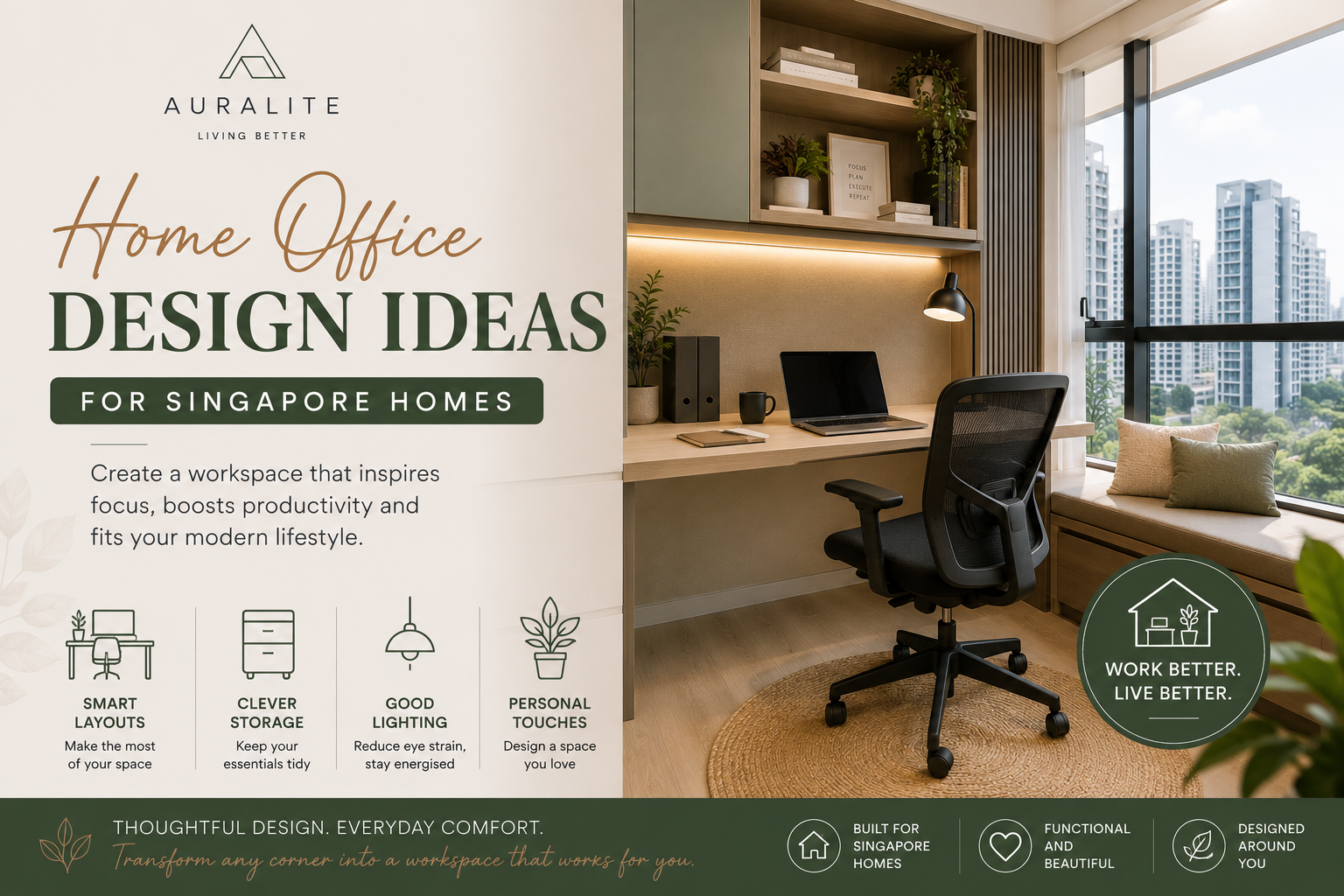
Remote and hybrid work have made home offices essential in Singapore homes — even compact HDB flats.
A well-designed workspace improves productivity and reduces stress.
Let’s dive into what we need to consider for home office design ideas for Singapore apartments.
1. Choose the Right Location
Ideal spots :
Near natural light
Away from main traffic areas
Using unused corners effectively
2. Built-In Study Desks
Custom carpentry allows :
Cable management
Integrated storage
Space optimisation
Especially useful in smaller homes.
3. Lighting Matters
Combine :
Natural light
Task lighting
Warm ambient lighting
Avoid harsh overhead glare.
4. Keep It Clutter-Free
Minimalist layouts enhance focus and reduce distractions.
Final Thought
A functional home office should feel comfortable, organised, and separate from your relaxation space.
Planning a renovation in Singapore?
At Auralite, we believe renovation is more than upgrading a space — it’s about creating a home designed with intention, precision, and long-term value.
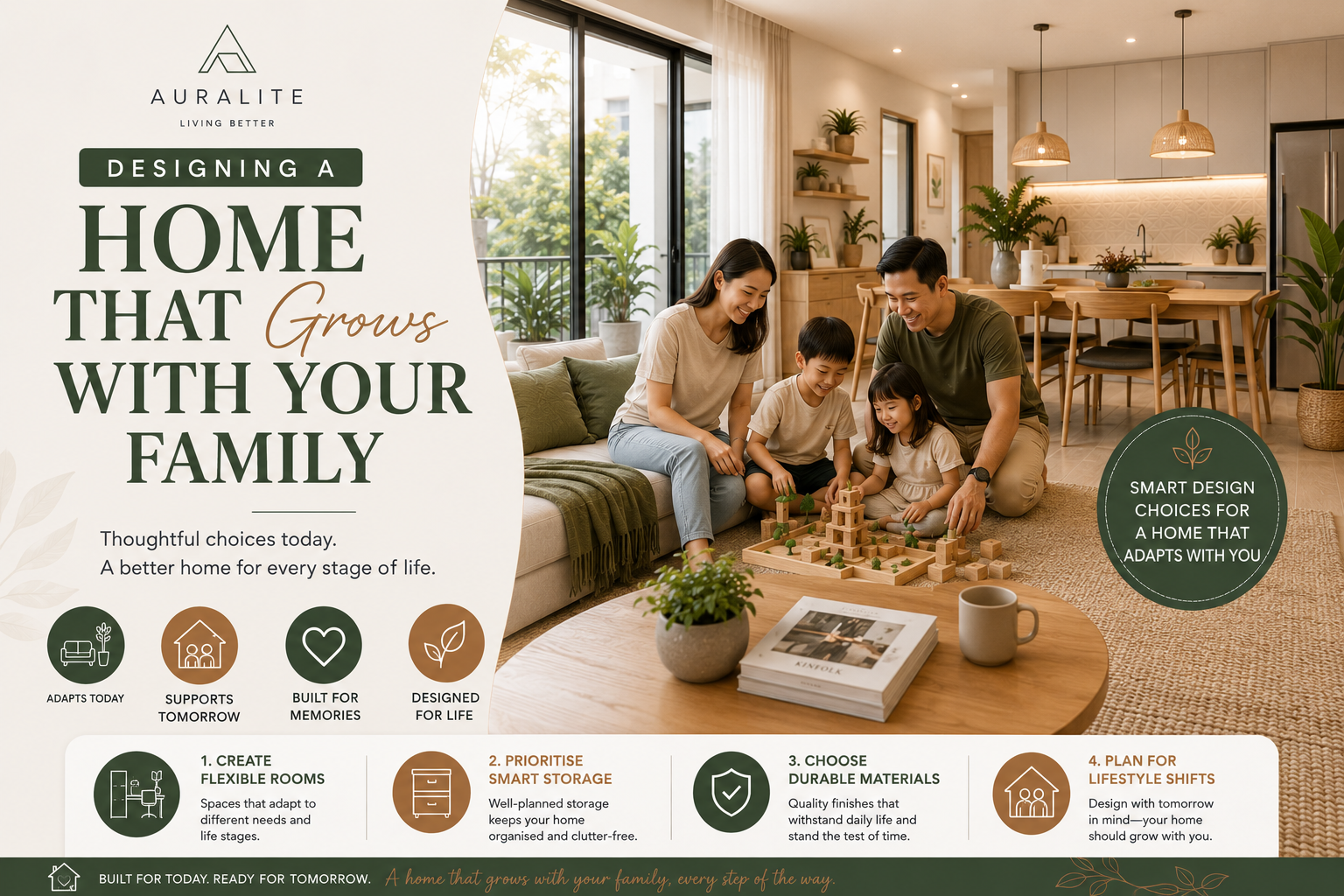
A well-designed home should not only suit your current lifestyle — it should adapt as your family evolves.
In Singapore, where space is often limited and renovations are significant investments, planning for flexibility is essential. Here’s how to designing a home that grows with your family.
1. Create Flexible Rooms
Instead of assigning permanent functions to every room, consider adaptable spaces.
A study room today can become a nursery later
A play area can transition into a teen study zone
Sliding partitions allow flexibility without structural changes
This approach works especially well in HDB and condo layouts.
2. Prioritise Smart Storage
Families accumulate items over time. Built-in carpentry with adjustable shelving ensures storage can evolve with changing needs.
Think:
Modular wardrobe interiors
Hidden storage under seating
Full-height cabinets for long-term organisation
3. Choose Durable Materials
High-traffic homes benefit from:
Scratch-resistant laminates
Quartz countertops
Vinyl flooring
Durability reduces maintenance stress.
4. Plan for Lifestyle Shifts
Working from home? Hosting gatherings? Caring for elderly parents?
A thoughtful layout supports multiple life stages without major re-renovations.
Final Thoughts
Good design is not just about aesthetics — it’s about future-proofing your lifestyle.
Planning a renovation in Singapore?
At Auralite, we believe renovation is more than upgrading a space — it’s about creating a home designed with intention, precision, and long-term value.
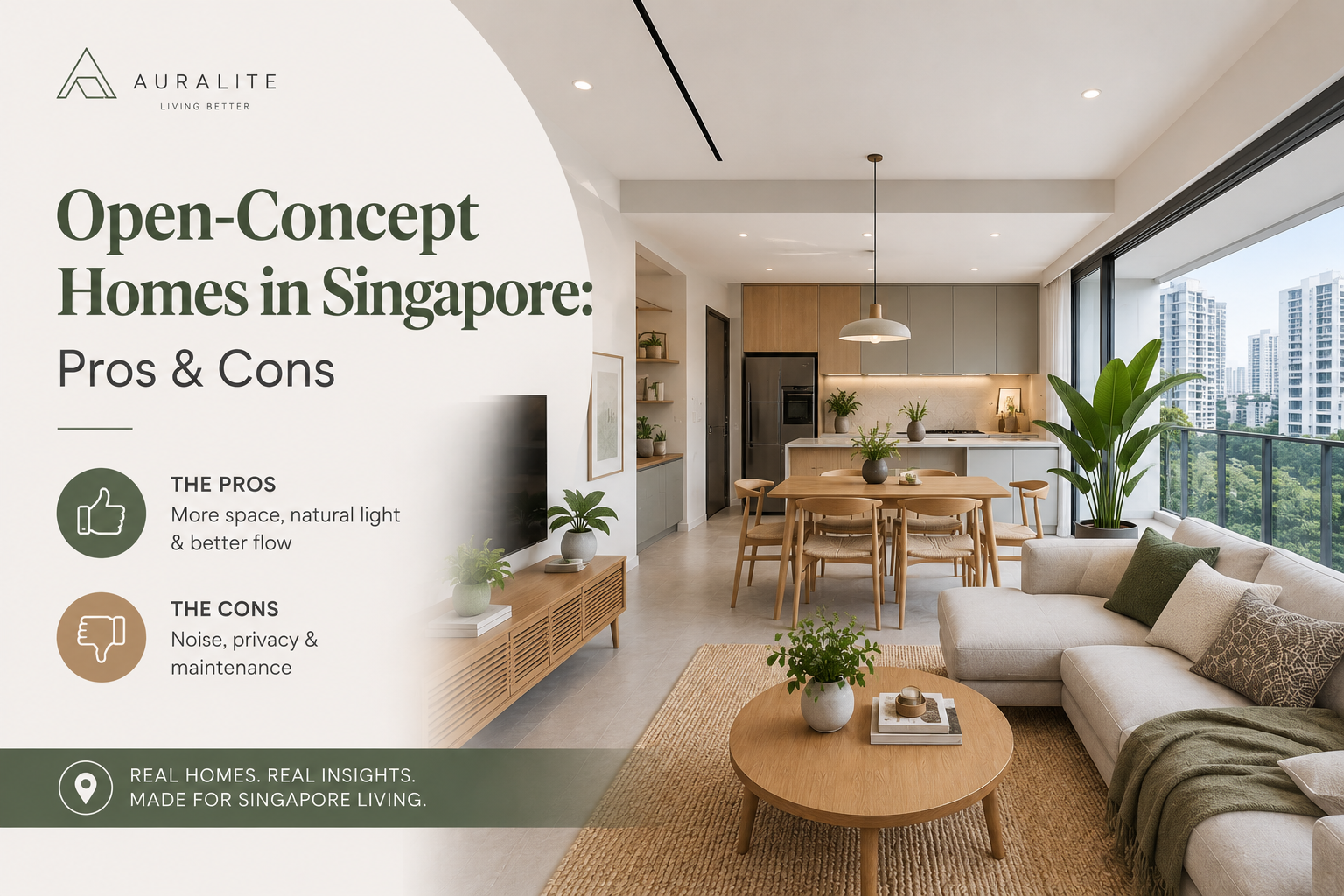
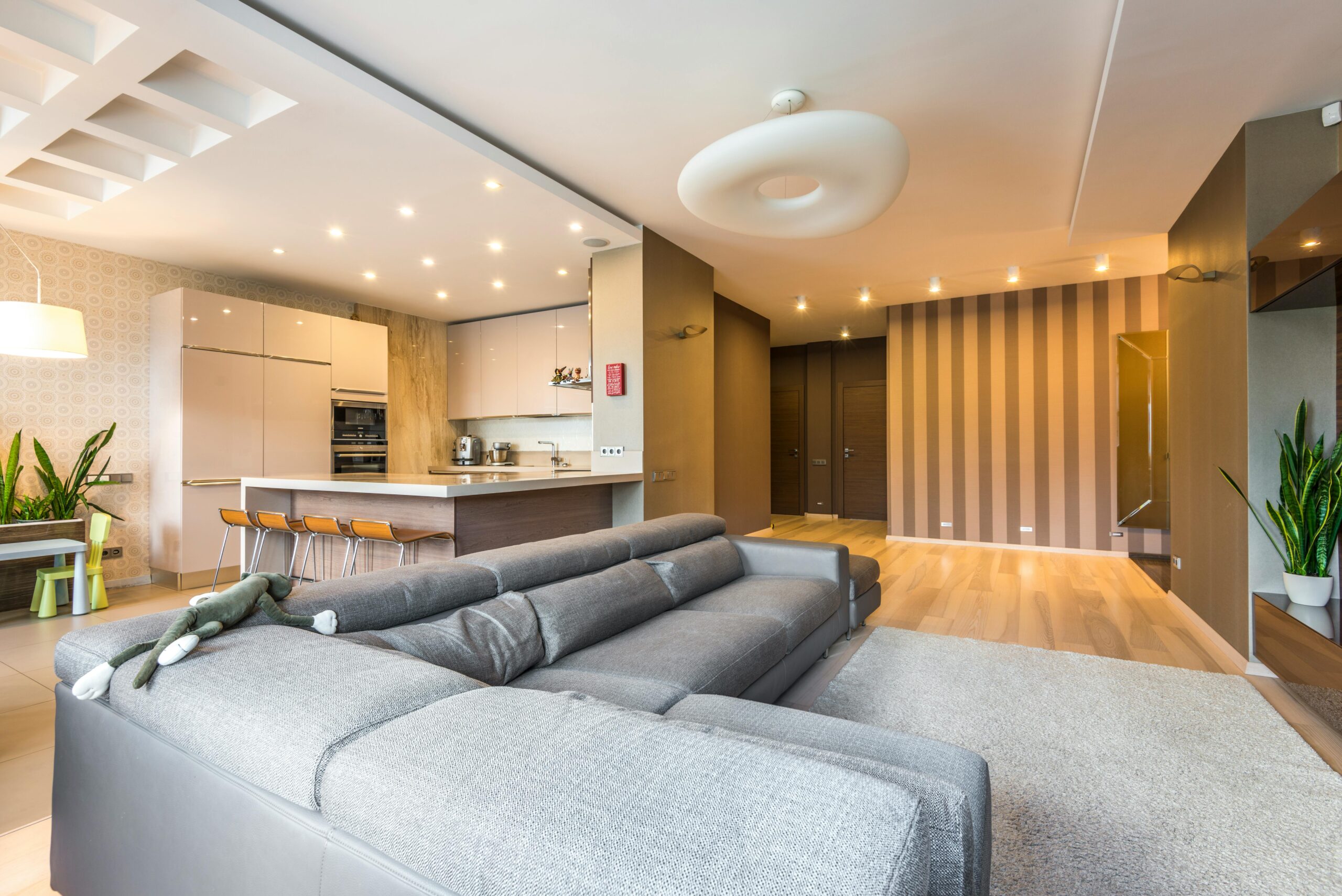
Open-concept layouts are popular in Singapore homes — particularly in BTO flats and modern condos.
But is it always the right choice?
Advantages
1. Enhanced Natural Light
Fewer walls allow light to travel across the space.
2. Better Social Interaction
Ideal for families and entertaining guests.
3. Perceived Spaciousness
Small homes feel larger and more breathable.
Potential Challenges
1. Cooking Odours
Open kitchens may spread smells.
2. Noise Transmission
TV sounds and conversations carry further.
3. Less Privacy
Private workspaces may require partitions.
Smart Solutions
Glass partitions
Sliding panels
Zoning through lighting and flooring
Final Thought
Open layouts work best when thoughtfully designed around your lifestyle habits.
Planning a renovation in Singapore?
At Auralite, we believe renovation is more than upgrading a space — it’s about creating a home designed with intention, precision, and long-term value.
Feng Shui often gets a bad reputation—associated with superstition, rigid rules, or expensive “cures.” But at its core, Feng Shui is simply about how your environment affects your energy, mood, and daily life. Think of it less as mysticism and more as intentional design.
If you strip away the myths, Feng Shui becomes surprisingly practical—especially for homeowners in Singapore where space, layout, and functionality matter so much.
What Feng Shui Really Is (and Isn’t)
Feng Shui, which literally translates to “wind” and “water,” is about how energy (or qi) flows through your home. Good Feng Shui encourages smooth, balanced movement—nothing blocked, cramped, or chaotic.
What it is not:
Not about placing random lucky objects
Not about blindly following a compass reading
Not about copying someone else’s layout
What it is:
Thoughtful spatial planning
Maximising natural light and airflow
Creating a sense of calm, order, and balance
In other words, good Feng Shui often overlaps with good interior design.
1. Declutter First — Always
Before you even think about layouts or colours, start here.
Clutter blocks movement—physically and mentally. A cramped home creates stress, reduces focus, and makes spaces feel smaller than they are.
Practical tips:
Clear entryways (your home’s “first impression”)
Avoid overfilling built-ins or storage
Keep surfaces intentionally styled, not crowded
If you do only one thing from this guide, declutter.
2. Let Energy (and People) Flow
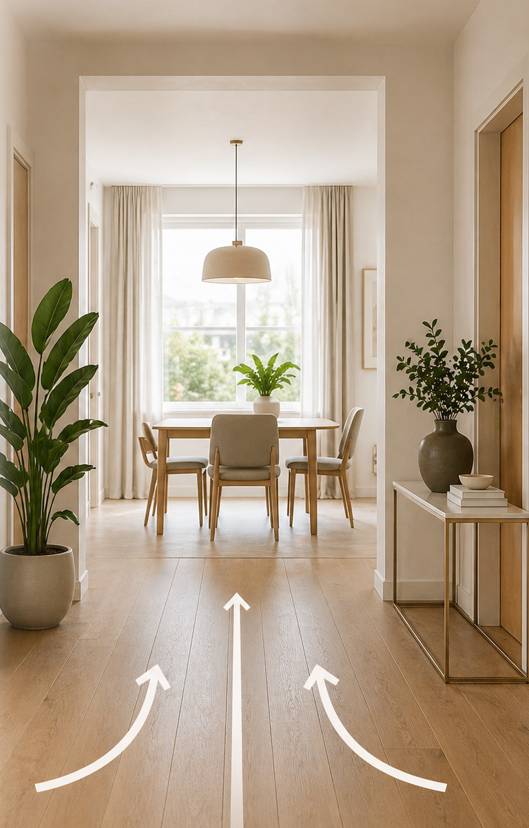
A good Feng Shui home allows easy movement.
Walk through your space—do you feel like you’re squeezing past furniture? Are there awkward corners or blocked pathways?
What to look out for:
Narrow walkways
Furniture placed directly in pathways
Doors that can’t fully open
A simple rule: if movement feels natural, your layout is probably working.
3. The “Command Position” Matters
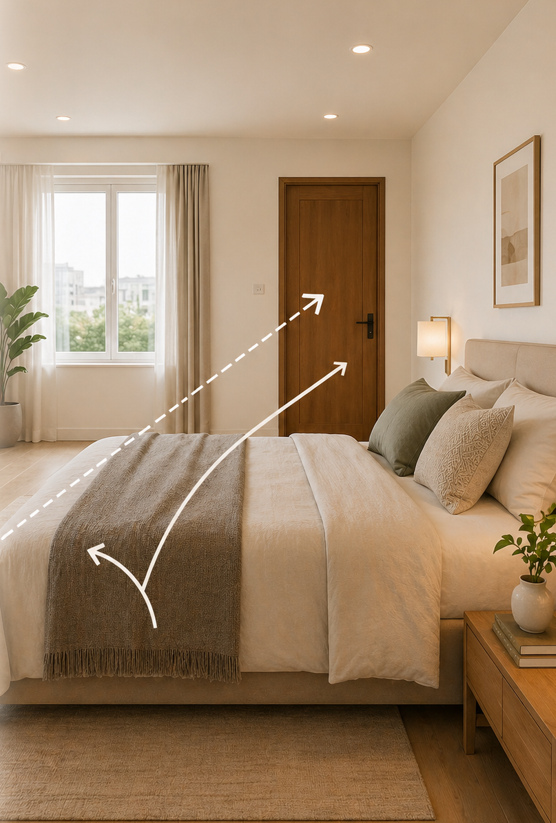
One of the most practical Feng Shui concepts is the command position—where key furniture (like your bed, desk, or sofa) is placed so you can see the entrance without being directly in line with it.
Why it matters:
It creates a subconscious sense of control and safety
It reduces stress and improves focus
Apply it to:
Your sofa (avoid having your back fully exposed to entryways)
Your bed (see the door, but not directly aligned)
Your work desk (face the entrance if possible)
4. Balance the Five Elements (Without Overthinking It)
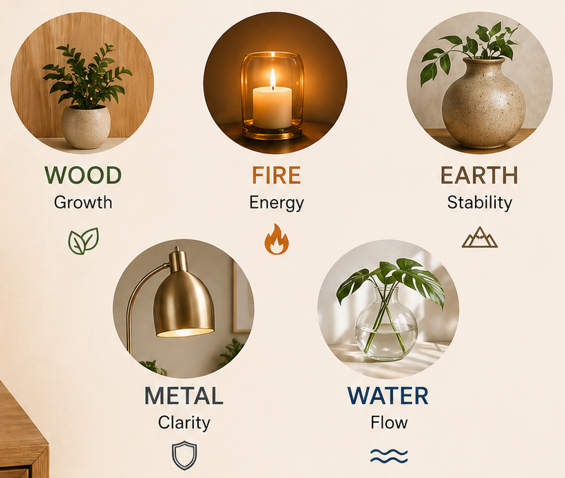
Feng Shui talks about five elements: Wood, Fire, Earth, Metal, and Water. But you don’t need to “calculate” anything complicated.
Instead, think of this as visual and material balance.
Element
Represents
Easy Ways to Include
Wood
Growth
Plants, wooden furniture
Fire
Energy
Warm lighting, candles, red tones
Earth
Stability
Ceramics, neutral colours
Metal
Clarity
Metallic finishes, white tones
Water
Flow
Mirrors, glass, dark accents
Key idea: Avoid extremes. A home that’s too cold, too dark, or too cluttered feels off—this is what Feng Shui is trying to correct.
5. Lighting Changes Everything
Poor lighting = stagnant energy.
Natural light is always best, but if your layout limits it (common in some HDB and condo units), layering your lighting becomes crucial.
Use a mix of:
Ambient lighting (general brightness)
Task lighting (for work areas)
Accent lighting (to highlight features)
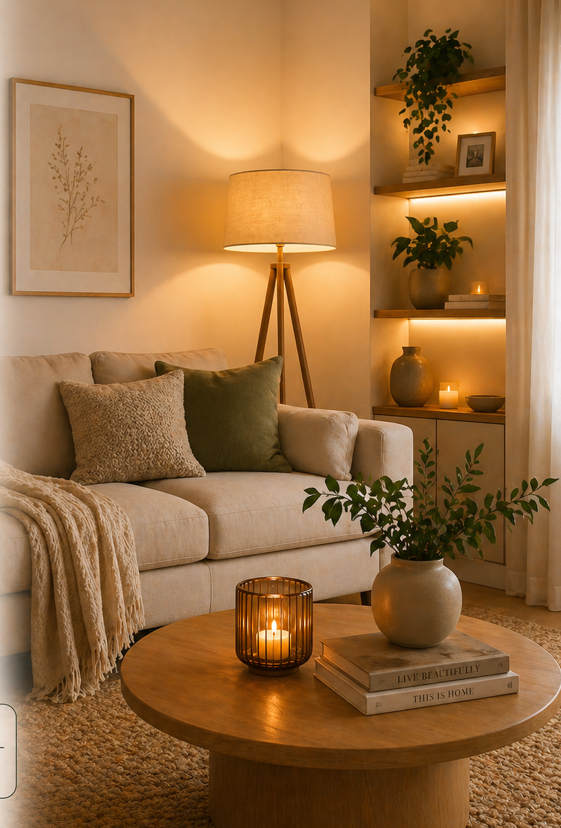
Warm lighting tends to feel more inviting, while harsh white light can make spaces feel clinical.
6. Your Entrance Sets the Tone
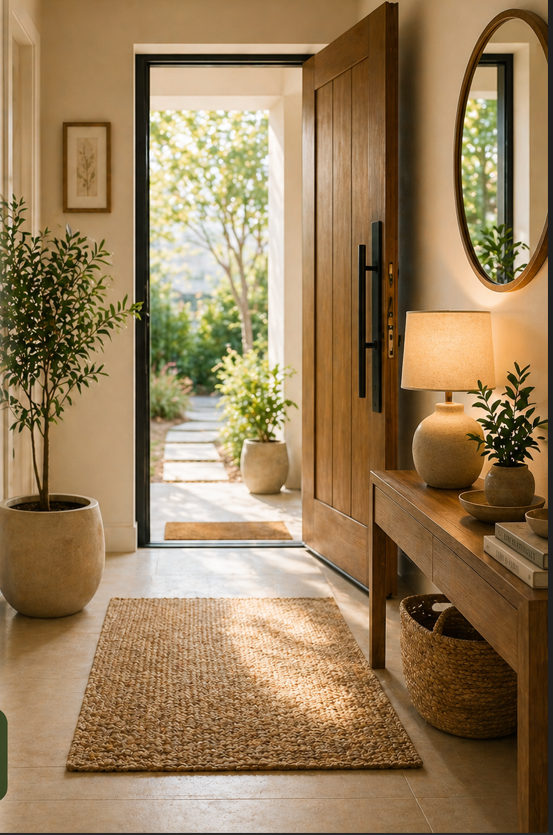
In Feng Shui, your main door is often called the “mouth of qi”—where energy enters your home.
But practically, it’s also your first psychological impression.
Simple improvements:
Keep it clean and uncluttered
Ensure good lighting
Avoid placing shoes or items in a messy pile
A well-kept entrance instantly makes your home feel more put together.
7. Mirrors: Use Them Intentionally
Mirrors are often misunderstood in Feng Shui.
They’re not “good” or “bad”—they simply reflect and amplify whatever is in front of them.
Use mirrors to:
Make small spaces feel larger
Reflect light into darker areas
Avoid placing them:
Directly facing clutter
Opposite your bed (can feel unsettling for some people)
8. Bedrooms Should Feel Like a Retreat
Your bedroom should prioritise rest, not stimulation.
That means:
Minimal electronics
Softer colours
Reduced clutter
Avoid turning your bedroom into a workspace if possible—this blurs mental boundaries between rest and productivity.
Common Feng Shui Myths (Let’s Clear These Up)
Myth 1: You need expensive Feng Shui items No—you don’t need crystals, fountains, or symbolic objects unless you personally like them.
Myth 2: There’s only one “correct” layout Every home is different. Good Feng Shui adapts to your space—not the other way around.
Myth 3: It’s all superstition At its core, Feng Shui is about comfort, flow, and psychology—things modern design also values.
Final Thoughts: Good Design = Good Feng Shui
When done right, Feng Shui doesn’t feel restrictive—it makes your home more livable.
A well-designed space should:
Feel easy to move through
Support your daily routines
Reduce stress instead of adding to it
That’s Feng Shui—without the myths.
Thinking of Improving Your Home Layout?
At Auralite, we believe great design should feel intuitive, not complicated. Whether you’re renovating your entire home or just reworking your layout, we help you create spaces that look good and feel right.
Reach out to Auralite for a personalised consultation and bring balance, function, and style into your home.
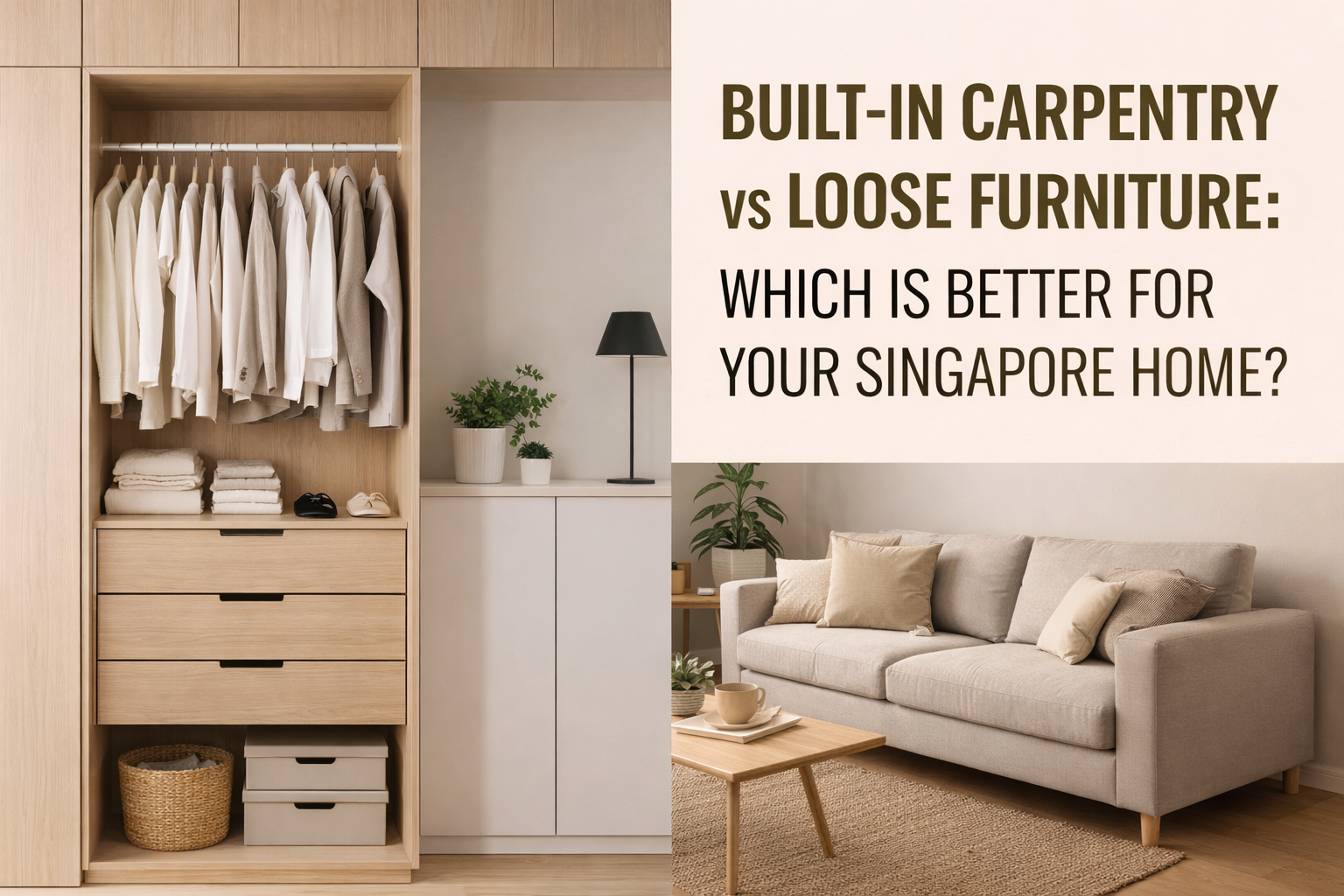
Many Singapore homeowners struggle with this question: Built-In Carpentry vs Loose Furniture: Which Is Better?
Should you invest in built-in carpentry, or opt for loose furniture?
This question is crucial as it impacts both functionality and aesthetics in your home.
The answer depends on space, lifestyle, and long-term plans.
🧱 Built-In Carpentry
Pros :
Maximises space
Customised fit
Seamless aesthetic
Ideal for small HDB layouts
Cons :
Higher upfront cost
Less flexibility
🛋 Loose Furniture
Pros :
Flexible
Easier to replace
Lower initial cost
Cons :
May waste vertical space
Less integrated look
What Works Best?
For HDB Flats / Condo / Apartments :
Strategic built-ins for storage
Loose furniture for flexibility
For Landed Homes :
Combination approach for zoning and versatility
Final Thoughts
The best design balances permanence and flexibility.
Not sure whether to invest in custom carpentry or keep things flexible with loose furniture?
At Auralite, we assess your layout, storage needs, and future plans before recommending the right approach. The goal isn’t just to fill your space — it’s to make it work beautifully for years to come.
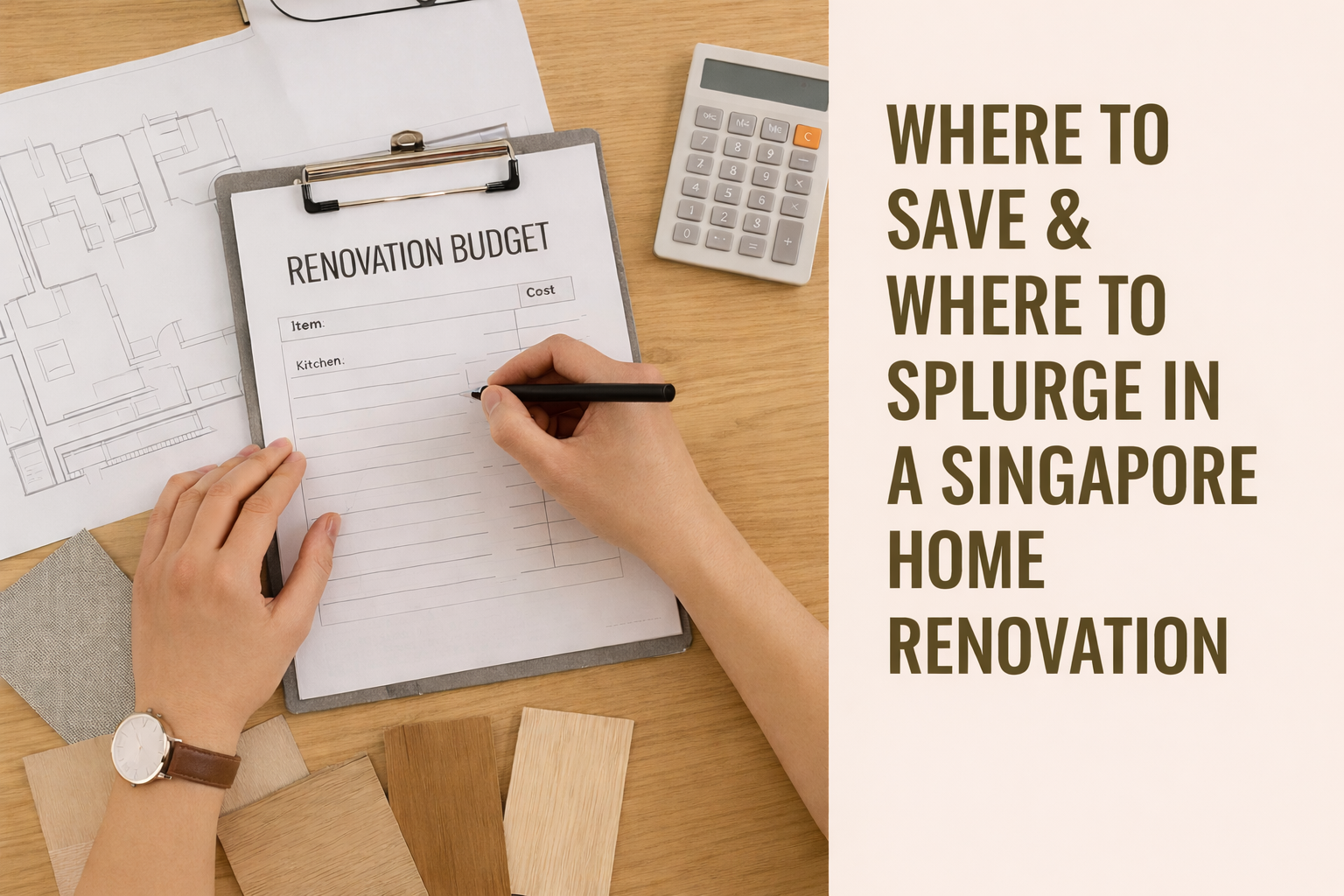
One of the most common questions homeowners ask is: “Where should I spend more, and where can I save?”
Whether you’re renovating an HDB flat, condo, or landed home in Singapore, making smart financial decisions ensures your renovation is both beautiful and sustainable.
Here’s how to prioritise wisely.
1. Kitchen & Bathrooms
These are high-usage areas and major value drivers.
Invest in:
Quality cabinetry hardware
Durable countertop materials
Reliable plumbing fittings
Poor-quality materials here often lead to long-term maintenance costs.
2. Carpentry Workmanship
Built-in carpentry forms the backbone of many Singapore homes. Good craftsmanship ensures:
Long-term durability
Smooth finishes
Proper alignment and structural integrity
Cheap carpentry may look fine initially but deteriorates quickly.
3. Electrical & Plumbing Works
These are hidden but critical systems. Cutting costs here risks safety and future repair expenses.
💡 Where You Can Save
1. Decorative Items
Loose furniture, décor pieces, and accessories can be upgraded gradually.
2. Feature Walls
Instead of costly feature panels, consider paint, texture, or lighting for visual impact.
3. Over-Customisation
Avoid building fixed carpentry for everything — flexibility adds value.
njoy smooth project flow, fewer Variation Orders (VOs), and clearer accountability — all signs of a professional renovation
Final Advice
Spend on what affects function and durability. Save on elements that can be changed over time.
Planning your renovation budget?
At Auralite.sg, we help homeowners prioritise what truly matters — investing in quality where it counts, and avoiding unnecessary overspending.
Speak to our team for a personalised renovation consultation and get clarity on how to allocate your budget wisely.
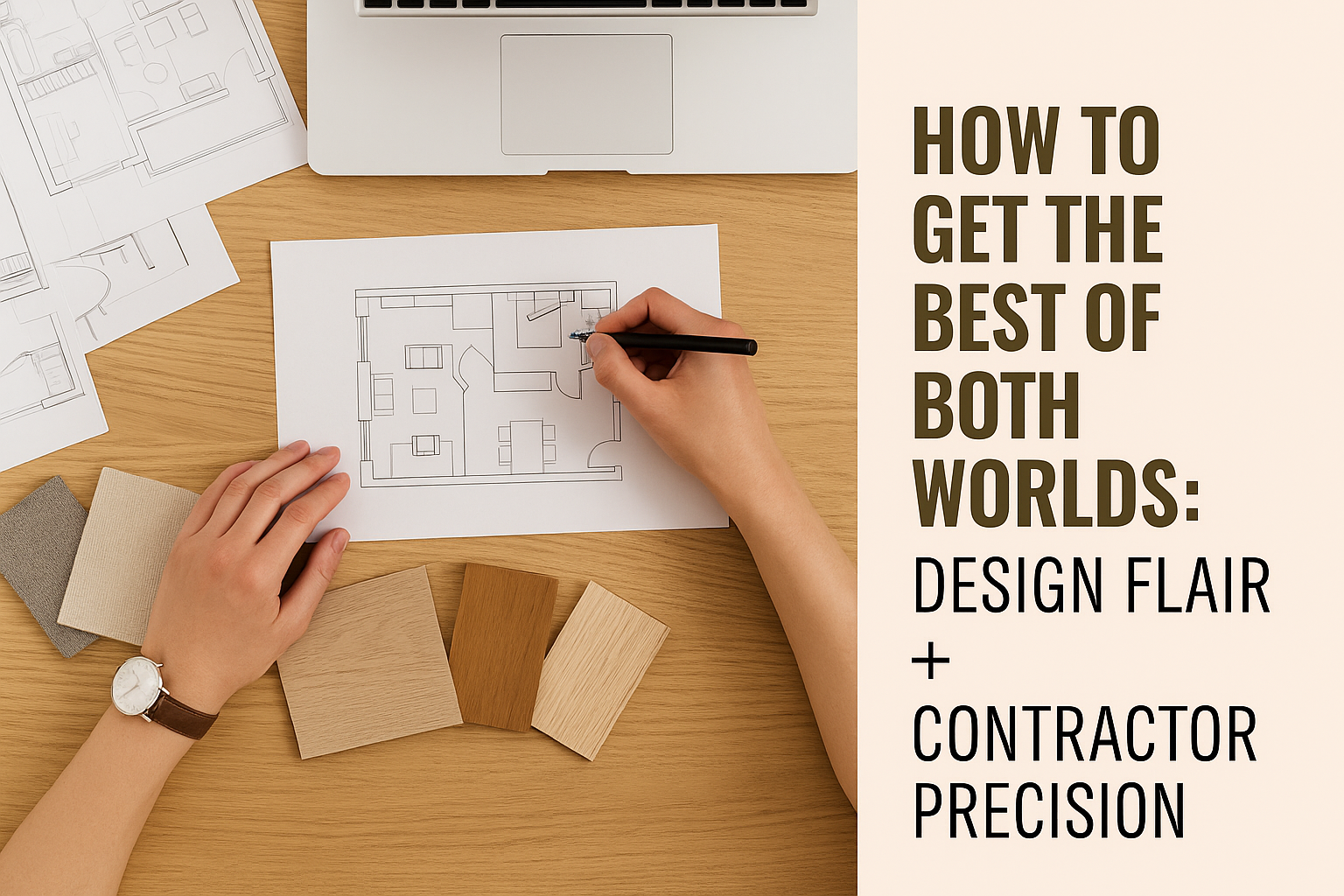
The perfect home is born when creativity meets craftsmanship — where bold ideas are brought to life with flawless execution.
In Singapore’s renovation scene, homeowners often feel they have to choose between an interior designer’s vision and a contractor’s technical precision. But when the right team collaborates, you don’t have to choose at all — you get the best of both worlds.
Here’s how design flair and contractor precision work together to create homes that are not only beautiful, but built to last.
1. Designers Dream, Contractors Deliver
Interior designers are masters of space, light, and aesthetics — they visualise how your home should feel. Contractors, on the other hand, make that vision real, ensuring every line, joint, and socket is executed safely and accurately.
When the partnership works:
Designs are buildable, not just beautiful.
Measurements, material choices, and structural needs are accounted for early.
Every feature is executed with precision — from carpentry joints to ceiling alignment.
🧱 At Auralite.sg, our teams work closely with interior designers to translate design intent into technical drawings that meet both creative and regulatory standards.
One of the biggest reasons for project stress is when the design looks stunning on paper but proves difficult (or expensive) to build. A reliable contractor bridges that gap early through technical consultation and feasibility checks.
What this looks like in practice:
Identifying potential material conflicts (e.g., moisture-sensitive finishes in bathrooms).
Suggesting cost-efficient alternatives that maintain design quality.
Advising on realistic timelines and lead times.
This collaboration saves homeowners from costly rework — and helps designers keep their creative integrity intact.
💡 Pro Tip: Invite your contractor into discussions before design finalisation. The earlier they’re involved, the smoother the build.
3. Precision Elevates Design
Every clean line, perfect join, and level surface depends on a contractor’s attention to detail. Even the best design can fall flat if workmanship is inconsistent.
Contractor precision ensures:
Tile joints align seamlessly with cabinetry lines.
Light fixtures and switches are positioned symmetrically.
Finishes like laminate edges and paint lines remain crisp and consistent.
At Auralite, our quality control checklist ensures no design detail is overlooked — so every designer’s concept is honoured down to the millimetre.
4. Communication Keeps the Vision Intact
Miscommunication is one of the leading causes of renovation frustration. That’s why open, structured communication between designers, contractors, and homeowners is crucial.
Reliable contractors will:
Provide clear progress updates.
Document any variations (VOs) before changes occur.
Consult designers before modifying details.
🧱 Auralite’s Workflow: We establish shared chat groups and regular site updates to keep all parties aligned — ensuring that every decision supports the original design intent.
5. Materials Matter — So Does Installation
A stunning design often depends on the right materials, but even premium products fail without skilled installation. That’s where contractor expertise complements design creativity.
Designers bring:
The look and mood (tone, texture, contrast).
Contractors bring:
The know-how for durability, alignment, and safety.
At Auralite.sg, we verify every material’s suitability before installation — balancing beauty with performance. A marble countertop, for example, isn’t just about pattern — it’s about proper support, sealing, and handling
6. Collaboration Prevents Costly Surprises
When design and construction teams work in isolation, small errors can snowball into budget overruns or timeline delays. But when both sides coordinate, you avoid mid-project surprises.
Common issues prevented through collaboration:
Lighting points not matching furniture layout.
Carpentry depth misaligned with wall panels.
Structural conflicts with concealed wiring or pipes.
💬 With proper coordination, homeowners enjoy smooth project flow, fewer Variation Orders (VOs), and clearer accountability — all signs of a professional renovation
7. The Result: Spaces That Feel Seamless
When creativity and precision unite, the outcome speaks for itself — a home that looks effortlessly cohesive, functions beautifully, and endures daily life.
It’s the combination of a designer’s artistry and a contractor’s discipline that transforms good homes into great ones.
At Auralite, We Build the Bridge Between Vision and Reality
At Auralite.sg, we see renovation as a partnership — not a transaction. Our teams collaborate closely with interior designers to ensure that every concept is engineered, built, and finished to perfection.
From planning and material selection to installation and final checks, we combine design flair with contractor precision — so homeowners never have to compromise between creativity and quality. 💬 Let’s create something extraordinary together.
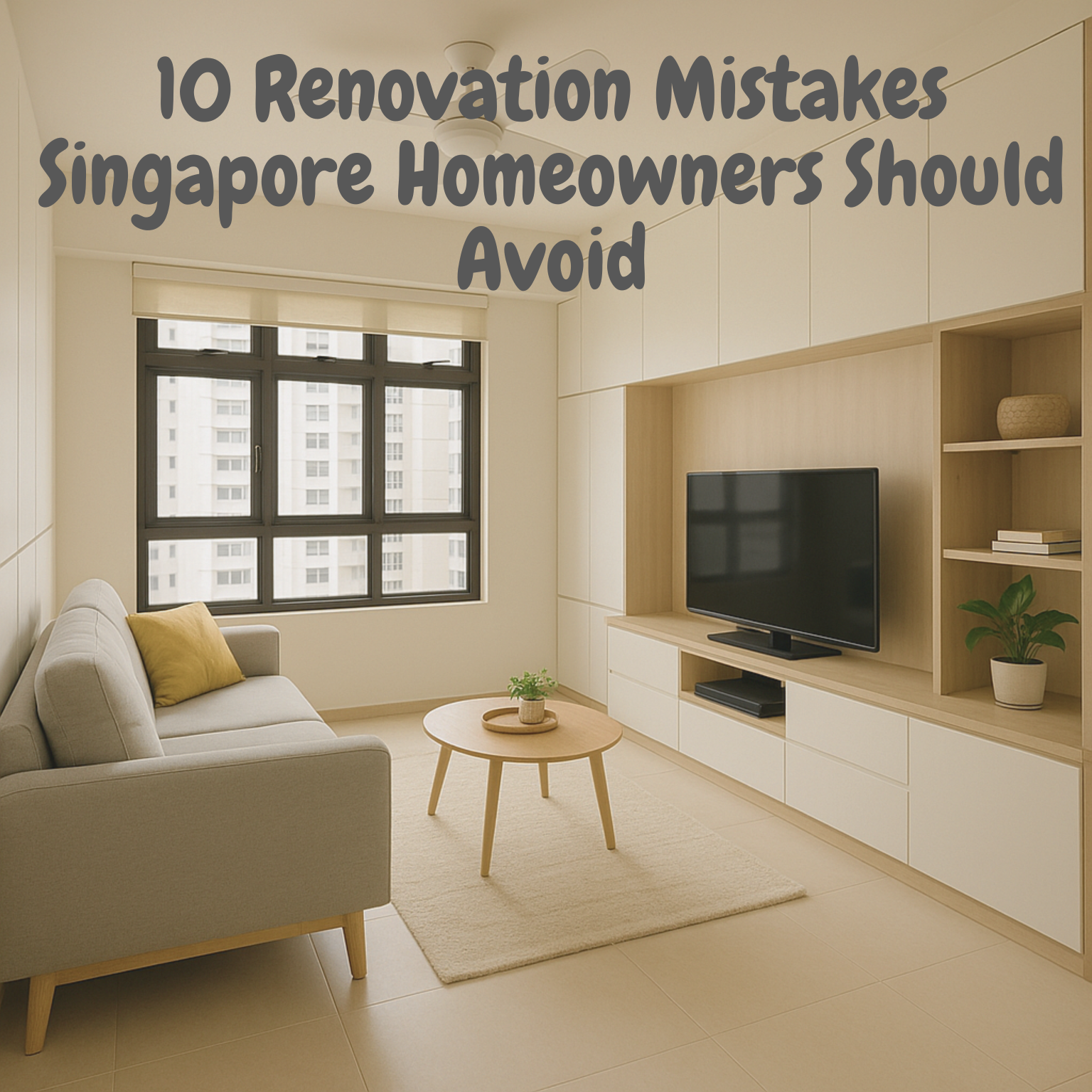
Renovating your HDB, condo or landed home in Singapore is exciting — new layout, better storage, a space that finally matches your lifestyle. But renovations can also be stressful and expensive when certain pitfalls are overlooked. From our contractor’s eyes, the most common problems happen before work even starts: unclear scopes, unrealistic budgets, and rushing decisions. Here are the 10 renovation mistakes Singapore homeowners should avoid — plus what to do instead for a smooth, value-for-money makeover.
1) Starting Without a Realistic Budget (or Buffer)
A beautiful moodboard is not a budget. List your must‑haves vs nice‑to‑haves and assign ballpark costs. Add a 10–15% buffer for changes you decide mid‑stream (e.g., extra power points, upgraded quartz, an additional glass panel). A budget with buffer is the easiest way to control scope creep.
2) Choosing the Cheapest Quote Without Checks
A suspiciously low quotation usually means compromises: thinner laminates, fewer inclusions, limited rectification. Always check HDB license (if HDB unit), reviews, portfolio and itemised scope. Price transparency beats a low lump‑sum any day.
3) Skipping HDB/MCST Rules and Permits
In HDBs, structural walls cannot be hacked, and noisy works have strict hours. In condos, MCST rules may restrict wet works, lift bookings, or require deposits. Submissions and approvals avoid reinstatement orders and stop‑work drama.
4) Poor Space Planning for Small Flats
A 4‑room HDB can feel spacious if circulation, storage and furniture scale are planned. Over‑sized islands and bulky sofas choke walkways. Focus on built‑ins, vertical storage, and multi‑use zones instead of trend‑only statements.
5) Confusing “Hidden” Costs with “Often‑Missed” or Variable Items
You’re right to expect haulage, electrical, plumbing, waterproofing and air‑con trunking to appear clearly in a professional, itemised quotation — they are not “invisible”. The real wallet surprises usually come from items homeowners didn’t include or didn’t know to decide on at the start:
– MCST/HDB admin items: renovation deposits, lift padding/booking fees, protection to common areas, post‑reno cleaning of common corridors.
– HDB‑appointed haulage (new BTOs): sometimes separate from your contractor; check your project’s appointed vendor and rates.
– Professional endorsements (condo/landed): PE fees for structural works, shop drawings for glass/railing, if applicable.
– Power upgrades: DB upgrades or SP Group load increase if you have many high‑load appliances (induction hob, oven, dryer, multiple air‑cons).
– Window/Grille compliance: Must use BCA‑approved window contractors; replacements and safety grilles are usually separate line items.
– Site rectifications: Pre‑existing defects (uneven screed, out‑of‑square walls), plumbing reroutes discovered after hacking, or levelling for vinyl/tiles.
– Appliance/fixture logistics: Delivery and installation of hob/hood/oven, water heater, taps, sanitaryware, shower screens, mirrors, curtains/blinds.
– Smart home add‑ons: Extra data points, switches, dimmers, door locks, ecosystem hubs (often added mid‑renovation).
– Post‑reno: Chemical wash, additional paint touch‑ups, deep cleaning if you change scope late.
Your best defence: a detailed scope freeze meeting before fabrication, and an itemised VO (variation order) process for anything you add later.
6) Designing for Trends, Not Your Lifestyle
Open shelves, microcement, fluted panels — lovely, but think maintenance. Singapore’s humidity adds dust and mould risk. For heavy cooking, prioritise work triangle, easy‑clean materials, strong ventilation over Instagram‑only features.
7) Under‑Specifying Materials and Hardware
Not all laminates, runners and hinges are equal. Ask for brand and series (e.g., ABS edging, soft‑close BLUM/Titus, anti‑warp doors, anti‑slip bathroom tiles). Clear specs = consistent quality.
8) Neglecting Storage (and Access)
Built‑ins without access panels (for air‑con servicing/water traps) become a future headache. Plan hidden storage in corridors, platform beds, bay windows, and over‑counter cabinets sized to real items.
9) Renovating Room‑by‑Room
Phased renovations feel “cheaper”, but remobilisation costs, repeated protection and longer disruption usually make it costlier overall. Do it once, do it right.
10) Not Reading (or Clarifying) the Fine Print
Confirm warranties, waterproofing scope, crack lines policy after hacking, payment milestones tied to deliverables, and post‑handover rectification windows. When in doubt, get it in writing.
Final Tips
– Set your baseline scope early and freeze it before fabrication.
– Prioritise safety and durability in wet and high‑use zones.
– Communicate regularly with your contractor — but avoid last‑minute scope changes.